In-Room Digital Signage for Patient Education | FVASEE


In-Room Digital Signage for Patient Education in Hospitals
Delivering clear, timely, and accessible health information directly inside patient rooms
Introduction
Patient education is a critical part of effective healthcare delivery. When patients understand their conditions, treatment plans, and daily care routines, they are more likely to feel confident and engaged throughout their hospital stay.
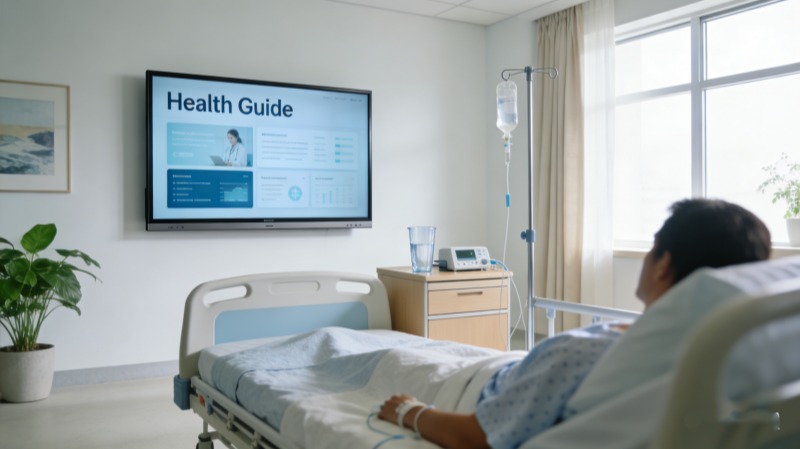
In-room digital signage provides hospitals with a practical way to deliver educational content where it matters most—inside the patient room. Unlike printed materials or verbal explanations alone, digital signage allows information to be presented visually, consistently, and at the right pace for each patient.
FVASEE in-room digital signage solutions help healthcare providers improve patient understanding without increasing staff workload.
What Is In-Room Digital Signage for Patient Education?
In-room digital signage refers to non-intrusive display systems installed in patient rooms to share educational and informational content. These displays focus on content delivery, rather than interaction, making them suitable for patients of all ages and technical abilities.
Common types of educational content include:
Explanations of medical procedures or treatments
Medication and recovery guidance
Hospital policies and care guidelines
Wellness, nutrition, and post-care information
By standardizing how information is presented, hospitals reduce confusion and improve message consistency.
Why Patient Education Benefits from Digital Signage
Improving Information Retention
Visual content is easier to absorb than text-heavy handouts. Digital signage combines text, graphics, and motion to help patients better understand and remember important information.
Reducing Repetitive Staff Communication
When key information is displayed clearly in patient rooms, care teams spend less time repeating routine explanations and can focus on more personalized care.
Supporting Diverse Patient Needs
Digital signage allows hospitals to adjust content for different languages, care types, or patient demographics, helping ensure that education is accessible to a broader patient population.
Designed for Patient Room Environments
In-room educational displays must feel supportive rather than overwhelming. FVASEE in-room digital signage solutions are designed with patient comfort and clarity in mind:
Clean layouts with readable fonts and balanced visuals
Screen brightness optimized for patient rooms
Quiet, distraction-free operation
Flexible mounting options to suit different room layouts
These features ensure that educational content enhances the care environment instead of adding visual noise.
Integration with Patient Room Display Systems
In-room digital signage works alongside other patient room displays, such as bedside digital whiteboards and interactive displays, each serving a distinct role.
Within a unified patient room display ecosystem:
Digital signage focuses on educational and informational content
Bedside whiteboards display essential daily care information
Interactive displays support engagement or remote consultations
FVASEE solutions allow hospitals to coordinate content across these systems while maintaining clear functional boundaries.

Centralized Content Management for Consistency
Managing patient education across multiple rooms can be challenging without centralized tools. FVASEE in-room digital signage supports centralized content control, enabling hospitals to:
Update educational materials quickly
Maintain consistency across departments
Customize content by ward or care type
This approach ensures that patients receive accurate and up-to-date information throughout their stay.
Supporting Better Patient Experience
Clear communication is a key driver of patient satisfaction. In-room digital signage helps patients feel informed and supported, which can reduce anxiety and improve overall experience.
Hospitals often find that well-designed educational displays contribute to:
Higher patient confidence
Improved understanding of care processes
More positive perceptions of care quality
Conclusion
In-room digital signage for patient education provides hospitals with a reliable and scalable way to improve how health information is delivered inside patient rooms. By presenting educational content clearly and consistently, hospitals support better understanding while easing communication demands on staff.
FVASEE in-room digital signage solutions help healthcare providers modernize patient education as part of a broader patient room display strategy.