Hospital Digital Signage Solutions | FVASEE Healthcare Displays

7 Key Benefits of Digital Signage in Hospitals with FVASEE Solutions
Enhancing Patient Experience, Staff Efficiency, and Hospital Operations
Digital signage has emerged as a transformative technology in modern healthcare facilities. Beyond static posters and paper notices, dynamic display systems deliver real‑time information, improve navigation, support patient education, and reinforce safety throughout a hospital. As patient needs and clinical workflows grow more complex, digital displays are increasingly integral to effective communication, operational efficiency, and overall satisfaction.
FVASEE digital signage and interactive display solutions match and extend these benefits with healthcare‑grade performance, intuitive control, and enterprise‑scale deployment — making them well suited for hospital environments of every size.
Below are seven compelling benefits of integrating digital signage into hospitals.
1. Clear Wayfinding and Navigation Support
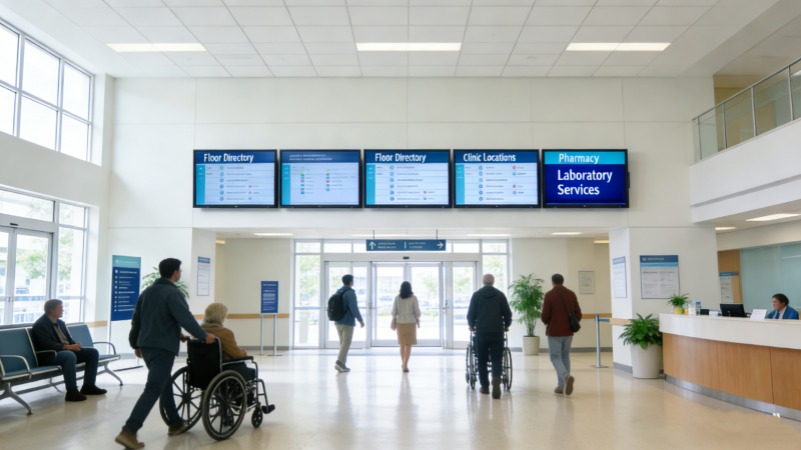
Hospitals often span wide campuses with multiple departments and specialized care units. Patients and visitors frequently struggle to find their way, leading to confusion, delays, and increased staff interruptions. Digital signage equipped with interactive wayfinding — including touch‑enabled FVASEE interactive displays — provides self‑service navigation that helps people locate appointment areas, elevators, and specialty units efficiently. This saves staff time and improves first‑time visitor experiences.
2. Personalized Patient Communication and Engagement
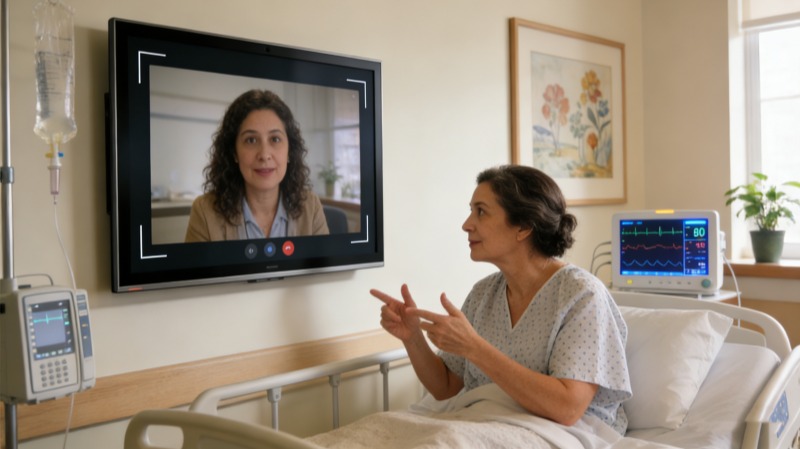
Patient engagement plays a significant role in recovery and compliance. Traditional whiteboards in rooms are limited, often outdated, and require manual updating. In contrast, digital displays in patient rooms powered by FVASEE digital signage and all‑in‑one interactive panels deliver personalized care information such as treatment updates, daily routines, and care team assignments. Combined with entertainment and education content, these displays support better outcomes and reduce anxiety.
3. Reduced Waiting Room Anxiety
Waiting is an inevitable part of hospital visits, but uncertainty can increase patient stress. Digital screens in waiting areas provide reassuring content such as estimated wait times, relevant health education videos, and engaging visuals. This distracts and informs patients as they wait, creating an environment that feels both supportive and transparent. Displays can also show surgical or procedure status updates in real time, improving family experience and trust while reducing staff interruptions.
4. Real‑Time Communication with Patients and Visitors
Hospitals must share timely information — from safety advisories to service notifications — across different areas. Digital signage allows administrators to update messages instantly across multiple screens, whether to deliver entrance instructions, promote health programs, or broadcast urgent alerts. FVASEE display networks help hospitals communicate with patients and visitors in real time, ensuring everyone receives consistent, accurate information at the right location.
5. Boost Hospital Branding and Engagement
Hospital displays are not just informational tools — they are branding platforms. Large‑format video walls, lobby displays, and hallway advertising screens allow facilities to showcase achievements, introduce care teams, share patient testimonials, and highlight specialties or services. FVASEE commercial digital signage systems support high‑resolution graphics and video playback that enhance a hospital’s identity and help reinforce patient trust.
6. Improved Internal Communication for Staff Coordination
Digital signage isn’t only patient‑facing — it also streamlines internal communications. Large displays at nurses’ stations, staff lounges, and departmental hubs can broadcast shift schedules, policy updates, emergency protocols, and task assignments. Because these messages can be updated centrally and pushed instantly, clinical teams stay informed without relying on fragmented channels like paper notices or email threads. FVASEE displays with centralized content management simplify this coordination.
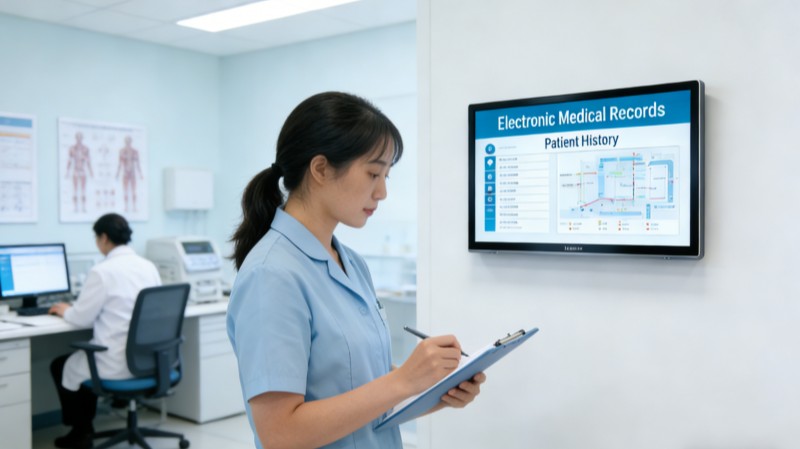
7. Enhanced Diagnostic Efficiency and Collaborative Workflows
In clinical settings, large, high‑resolution displays allow for clearer visualization of medical imaging, EHR data, test results, and patient analytics. Widescreen monitors reduce visual clutter and help clinicians evaluate details more quickly. With interactive annotation features available on select FVASEE displays, care teams can view, mark up, and share diagnostic information in real time, improving collaboration and accelerating care decisions.
Digital Displays as a Foundation for Modern Healthcare
From guiding visitors and reducing patient anxiety to enhancing internal workflows and accelerating clinical decisions, digital signage plays a central role in hospital communication and operational efficiency.
FVASEE digital signage solutions — including interactive wayfinding displays, patient room boards, and commercial signage networks — equip hospitals with flexible, manageable, and high‑impact tools that improve the experience for patients, visitors, and staff alike.
By adopting well‑designed digital display ecosystems, healthcare organizations can elevate communication, strengthen workflows, and deliver a more connected and efficient care environment.