ICU Display Solutions for Critical Care Environments | FVASEE

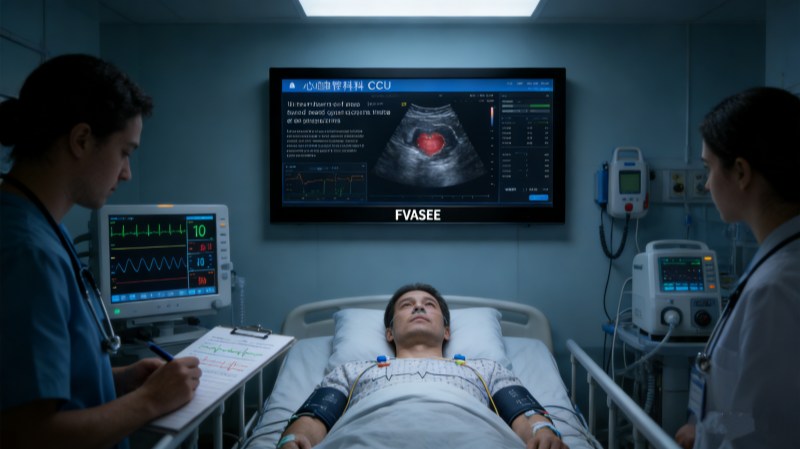
ICU Display Solutions for Critical Care Environments
Enhancing critical care visibility, communication, and operational efficiency with ICU-grade digital displays
Introduction
Intensive Care Units (ICUs) are high-stakes environments where timely and accurate information is critical. Nurses, physicians, and specialists rely on real-time data to make decisions that can directly impact patient outcomes.
Traditional paper charts or fragmented digital systems can create delays and communication gaps. ICU display solutions provide centralized, visual tools that improve awareness, coordination, and decision-making in these critical care areas.
FVASEE ICU display solutions are designed to meet the demanding operational requirements of critical care environments while integrating seamlessly into hospital digital ecosystems.
What Are ICU Display Solutions?
ICU display solutions are purpose-built digital screens installed in patient rooms, nurse stations, and ward corridors to provide critical information visibility. These displays support both patient monitoring and care team coordination.
Key functions include:
Real-time patient vital signs and condition summaries
Care team assignments and workflow alerts
Alerts and notifications for critical events
Integration with hospital information systems for centralized data
Unlike standard ward displays, ICU solutions emphasize immediacy, reliability, and high visibility to support rapid decision-making.
Benefits of ICU Digital Displays
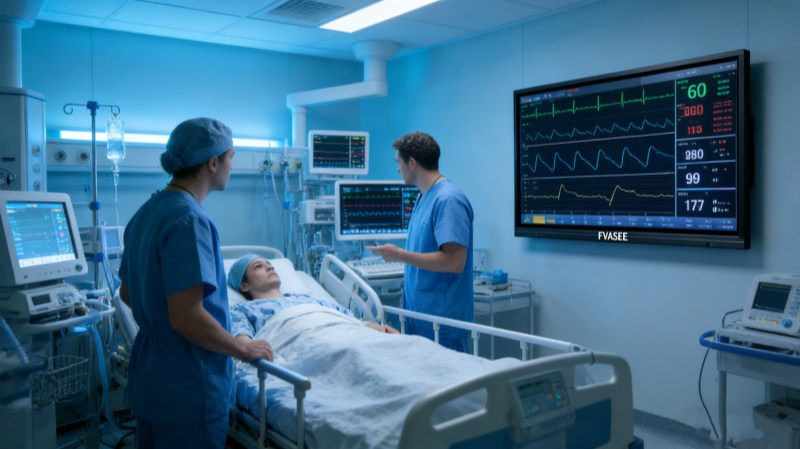
1. Real-Time Monitoring
ICU displays can integrate with medical monitoring systems, providing staff with continuously updated patient data. Visual dashboards allow teams to quickly detect changes and respond accordingly.
2. Enhanced Team Communication
Displays at nurse stations or shared ICU zones provide a common reference for all care team members, improving handoffs and reducing miscommunication.
3. Reduced Cognitive Load
By consolidating information visually, ICU displays help staff focus on critical tasks rather than searching for scattered data.
4. Operational Efficiency
Centralized, clearly presented information can reduce delays, streamline workflows, and optimize staffing assignments.
Types of ICU Displays
FVASEE ICU solutions offer multiple display configurations tailored to the critical care environment.
Bedside Interactive Displays
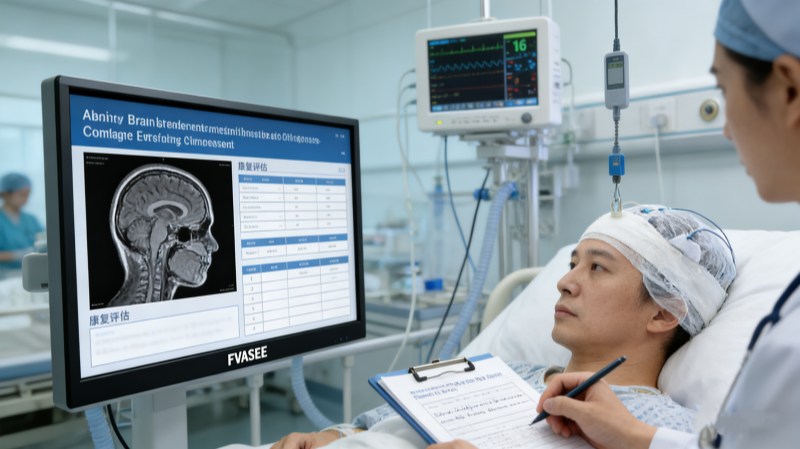
Touch-enabled screens allow care teams to review patient data, input notes, or access telehealth consultations directly at the bedside.
Nurse Station Dashboards
Centralized dashboards consolidate information from multiple patients, enabling coordinated care and faster decision-making.
Corridor or Zone Displays
Visual alerts and summaries outside patient rooms provide rapid situational awareness for staff moving through the ICU.
Design Considerations for ICU Environments
Critical care units demand displays that operate reliably under intense, continuous use. FVASEE ICU displays are designed with the following features:
Commercial-grade panels for long uptime and high durability
High-contrast visuals for readability in varied lighting conditions
Mounting options suitable for tight or high-traffic ICU layouts
Compatibility with hospital monitoring and alert systems
These design choices ensure ICU displays are practical, reliable, and safe for daily clinical use.
Integration with Broader Hospital Systems
ICU display solutions work best as part of a layered digital ecosystem:
Patient room displays handle individualized information
Smart ward displays manage unit-level coordination
Hospital-wide displays communicate broader operational updates
FVASEE ICU displays are compatible with existing hospital IT systems, enabling seamless integration while maintaining data security and compliance.
Supporting Patient Care and Outcomes
Accurate and visible information is directly linked to patient outcomes in ICU settings. Digital displays help care teams:
Detect deterioration quickly
Communicate effectively during shift changes
Standardize critical information presentation
Reduce potential errors caused by delayed or incomplete data
By improving situational awareness, ICU displays contribute to both patient safety and staff efficiency.
Conclusion
ICU display solutions are essential for modern critical care environments. FVASEE ICU-grade digital displays provide hospitals with reliable, real-time, and highly visible information channels, supporting both clinical decision-making and operational efficiency.
Deploying FVASEE displays in ICUs ensures that critical information reaches the right people at the right time, enhancing patient safety and care quality.