Bedside Digital Whiteboards for Patient Rooms | FVASEE


Bedside Digital Whiteboards for Modern Patient Rooms
Replacing traditional whiteboards with dynamic, accurate, and patient-friendly digital communication tools
Introduction
Bedside whiteboards have long been a staple in patient rooms, used to display care team names, daily goals, and essential reminders. While effective in principle, traditional whiteboards often rely on manual updates, inconsistent formatting, and limited space.
Bedside digital whiteboards offer a modern alternative—providing hospitals with a reliable way to present up-to-date information clearly and consistently at the point of care.
FVASEE bedside digital whiteboard solutions are designed to support patient communication while fitting naturally into daily clinical routines.
What Is a Bedside Digital Whiteboard?
A bedside digital whiteboard is a dedicated in-room display that replaces or supplements a traditional dry-erase board. It presents patient-relevant information in a digital format that can be updated centrally or locally as needed.
Typical content includes:
Care team member names and roles
Daily care goals or treatment milestones
Scheduled activities or check-in times
Patient education reminders
By digitizing this information, hospitals reduce manual effort while improving accuracy and readability.
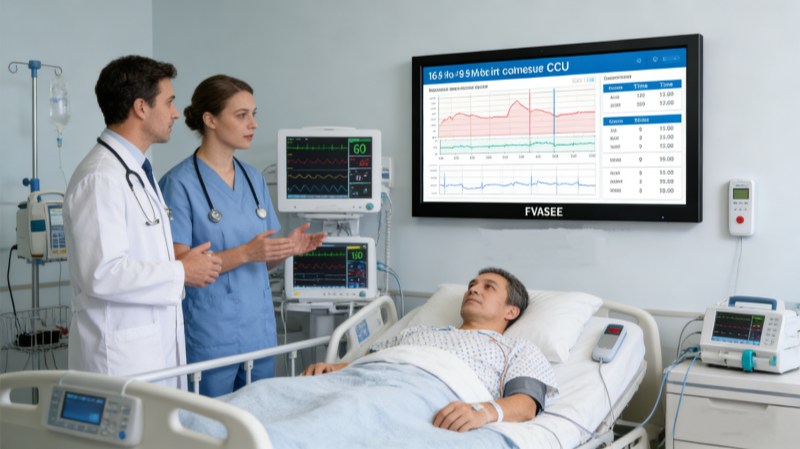
Why Hospitals Are Adopting Digital Bedside Whiteboards
Healthcare facilities are increasingly adopting digital bedside whiteboards to address common communication challenges in patient rooms.
Improving Information Accuracy
Manually updated boards are prone to errors and omissions. Digital whiteboards help ensure that information reflects current care plans and staffing assignments.
Enhancing Patient Understanding
Clear, structured layouts make it easier for patients and families to understand what to expect during their stay, reducing confusion and repeated questions.
Supporting Care Team Efficiency
By standardizing information presentation, bedside digital whiteboards reduce the time staff spend rewriting boards and answering routine inquiries.
Designed for Patient-Facing Environments
Bedside displays must be easy to read, intuitive, and non-intrusive. FVASEE bedside digital whiteboards are designed with patient comfort in mind:
Clean, high-contrast interfaces for easy visibility
Screen sizes suitable for bedside viewing
Quiet operation and minimal visual distraction
Secure mounting options for hospital rooms
These design considerations help ensure that digital whiteboards support care rather than compete for attention.
Integration with Patient Room Display Systems
Bedside digital whiteboards work best as part of a broader patient room display strategy. They complement in-room digital signage and interactive displays by focusing on essential, always-visible information.
When integrated into a unified display ecosystem, hospitals benefit from:
Consistent information across patient rooms
Centralized content updates when needed
Flexibility to adapt layouts for different departments
FVASEE bedside digital whiteboards are compatible with centralized management platforms, allowing facilities to maintain control while scaling deployment.
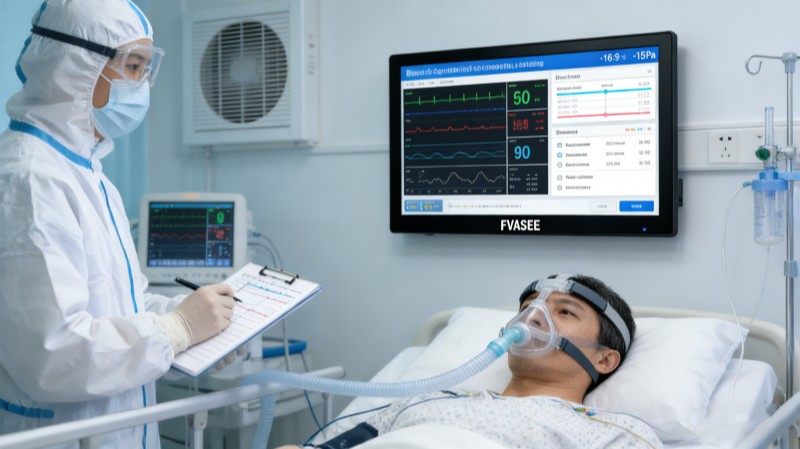
Supporting Patient Experience and Care Quality
Clear communication plays a direct role in patient satisfaction. Digital bedside whiteboards help patients feel informed and involved, contributing to a more transparent care experience.
Benefits often include:
Reduced patient anxiety
Improved patient engagement
Better alignment between patients and care teams
By presenting information visually and consistently, hospitals create a more reassuring in-room environment.
Reliable Hardware for Hospital Use
Healthcare environments demand equipment that performs consistently. FVASEE bedside digital whiteboards use commercial-grade displays designed for long operating hours and continuous use.
Features typically include:
Durable panels for daily operation
Stable performance under extended uptime
Compatibility with hospital-grade mounting systems
This reliability makes digital whiteboards suitable for long-term deployment across patient rooms.
Conclusion
Bedside digital whiteboards provide hospitals with a practical way to modernize in-room communication. By replacing manual boards with digital displays, healthcare facilities improve information accuracy, patient understanding, and operational efficiency.
FVASEE bedside digital whiteboard solutions support these goals through reliable hardware, thoughtful design, and integration within a broader healthcare display ecosystem.