Interactive Displays for Medical Training: Enhancing Education and Collaboration with FVASEE

Interactive Displays for Medical Training: Enhancing Education and Collaboration with FVASEE
Medical training environments demand clarity, interaction, and collaboration. From staff onboarding and continuing education to case reviews and clinical workshops, effective learning depends on how information is shared and discussed.
Interactive displays for medical training provide healthcare organizations with a more engaging and flexible way to deliver educational content. As part of FVASEE healthcare display solutions, interactive flat panel displays support modern medical education by improving participation, communication, and knowledge retention.
The Changing Needs of Medical Training
Healthcare education is no longer limited to lectures and printed materials. Hospitals and medical institutions increasingly rely on interactive, visual tools to support hands-on learning and real-time collaboration.
Common challenges in traditional training environments include:
limited visibility for large groups
difficulty sharing live content from multiple sources
lack of interaction during sessions
inefficient collaboration across departments
Interactive displays address these challenges by creating shared, dynamic learning spaces.
What Are Interactive Displays for Medical Training?
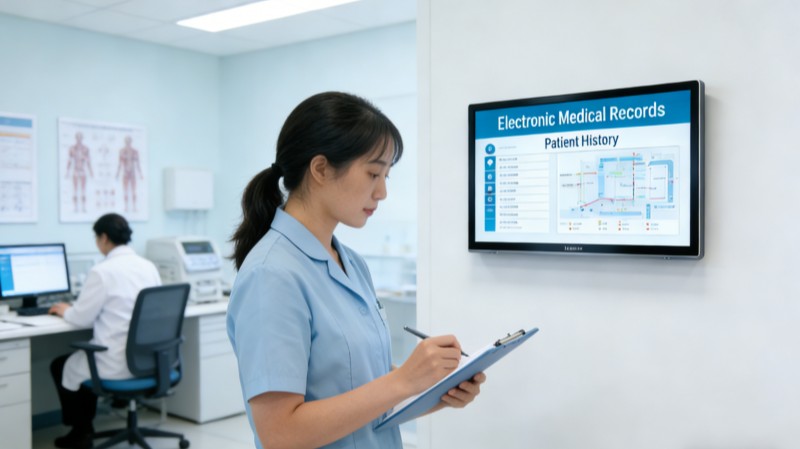
Interactive flat panel displays are large-format touch-enabled screens that allow users to write, annotate, share content, and collaborate in real time.
FVASEE interactive displays for medical training are commonly used in:
hospital training rooms
medical education classrooms
conference and meeting spaces
simulation and skills labs
These displays act as central collaboration tools that bring together instructors, clinicians, and trainees.
Improving Engagement and Knowledge Retention
Active participation plays a key role in effective learning. Interactive displays encourage engagement by allowing participants to interact directly with content.
Medical training teams can use interactive displays to:
annotate medical images and diagrams
review clinical cases collaboratively
display live data or presentations
capture notes and key discussion points
This interactive approach helps improve understanding and knowledge retention compared to passive learning methods.
Supporting Collaboration Across Teams and Departments
Medical training often involves multidisciplinary teams. Interactive displays make it easier to collaborate across specialties and departments.
FVASEE interactive displays support:
wireless screen sharing from multiple devices
real-time annotation during discussions
seamless transitions between presenters
hybrid collaboration with remote participants
This flexibility is especially valuable for large hospitals and healthcare networks where teams may be distributed across locations.
Enhancing Simulation and Skills Training
Simulation-based training is an essential part of modern medical education. Interactive displays support simulation environments by providing clear visual reference points and collaborative tools.
Use cases include:
displaying procedural steps during simulations
reviewing recorded sessions for feedback
annotating outcomes and improvement areas
supporting group discussions after exercises
Interactive displays help turn simulations into structured learning experiences.
Integrating Training Displays into a Healthcare Display Ecosystem
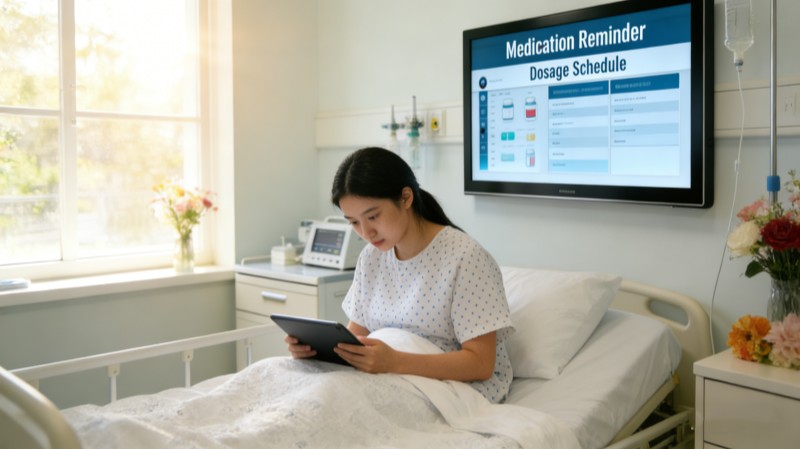
Medical training does not operate in isolation. Interactive displays work best when integrated with other healthcare display solutions such as digital signage for communication and safety messaging.
FVASEE supports a connected display ecosystem where training, communication, and operational displays complement each other across the healthcare facility.
Designed for Professional Healthcare Environments
Medical training displays must be reliable, easy to use, and suitable for frequent use by different teams.
FVASEE interactive displays are designed with:
commercial-grade performance
high-resolution visual clarity
intuitive user interfaces
compatibility with common medical training tools
These features make them suitable for daily use in demanding healthcare environments.
Building Better Medical Training Experiences
Interactive displays play an increasingly important role in medical education and professional development. By enabling collaboration, interaction, and visual learning, these displays help healthcare organizations deliver more effective training programs.
As part of its healthcare display portfolio, FVASEE provides interactive display solutions that support medical training, collaboration, and continuous learning — helping healthcare teams build knowledge and confidence in a rapidly evolving clinical landscape.