Interactive Displays for Telehealth in Patient Rooms | FVASEE

Interactive Displays for Telehealth in Patient Rooms
Enabling virtual care, remote consultation, and patient–clinician communication inside hospital rooms
Introduction
Telehealth has become a practical extension of in-person care rather than a temporary alternative. In hospital settings, virtual consultations are increasingly used to connect patients with specialists, reduce unnecessary room entries, and support multidisciplinary collaboration.
Interactive displays in patient rooms provide the visual and technical foundation for telehealth workflows. By offering larger screens, stable performance, and intuitive interaction, these displays support remote communication without disrupting existing care routines.
FVASEE interactive display solutions are designed to support telehealth use cases inside patient rooms while aligning with hospital operational requirements.
What Are Interactive Displays for In-Room Telehealth?
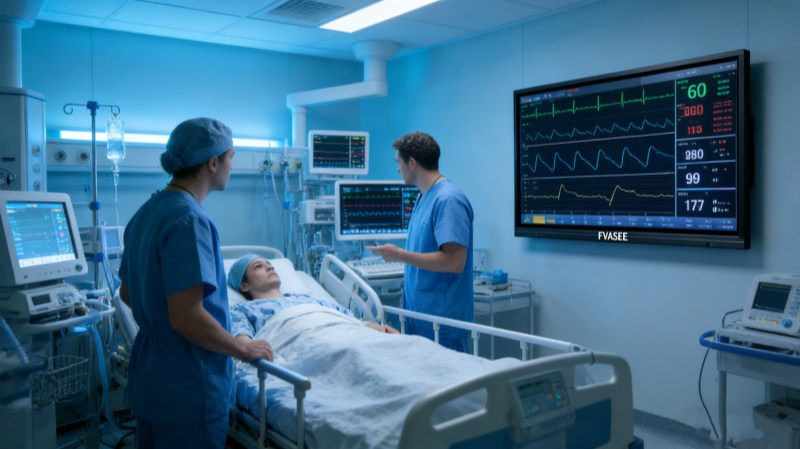
Interactive displays for telehealth are touch-enabled or camera-integrated screens installed in patient rooms to support real-time remote communication. Unlike standard televisions or basic monitors, these displays are designed for two-way interaction and professional healthcare use.
Typical telehealth applications in patient rooms include:
Virtual specialist consultations
Remote rounding or check-ins
Multidisciplinary care discussions
Patient–family video communication when appropriate
The display acts as a shared visual interface, making remote interactions clearer and more personal than audio-only communication.
Why Patient Rooms Require Purpose-Built Telehealth Displays
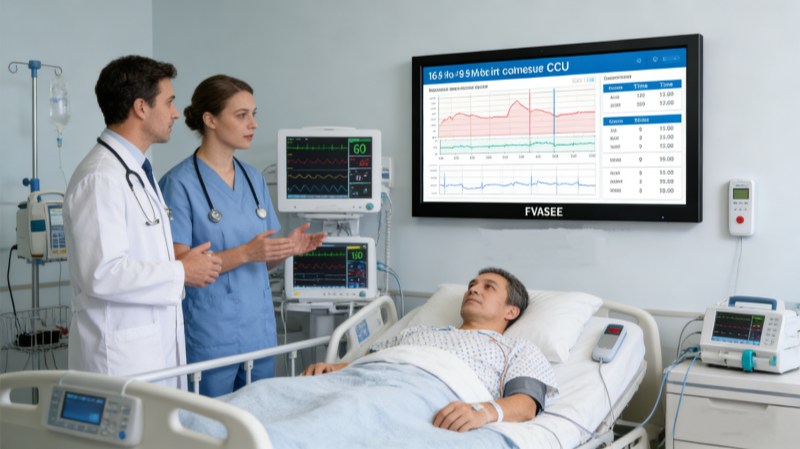
Telehealth in patient rooms introduces specific requirements that general-purpose screens do not always meet.
Visual Clarity and Screen Size
Larger interactive displays allow patients to clearly see clinicians, educational visuals, or shared documents. This improves communication accuracy, especially for elderly or visually impaired patients.
Ease of Use for Patients and Staff
Telehealth displays must be simple to operate. Touch interaction and straightforward interfaces reduce the need for technical assistance during consultations.
Consistent Performance
In clinical environments, displays must operate reliably during scheduled consultations without lag, instability, or frequent reconfiguration.
Supporting Clinical Workflows Without Disruption
One of the key considerations for in-room telehealth is workflow integration. Interactive displays should complement, not complicate, daily care routines.
When used effectively, in-room telehealth displays can help:
Reduce unnecessary physical room visits
Enable faster access to specialists
Support collaboration across departments
Maintain continuity of care during staff transitions
These benefits depend on displays being consistently available and easy to integrate into existing processes.
Design Considerations for Patient Room Telehealth Displays
FVASEE interactive displays for telehealth are designed with hospital environments in mind, focusing on practical usability rather than consumer-style features.
Key design considerations include:
Commercial-grade panels suitable for extended daily operation
Screen brightness optimized for patient room lighting
Flexible mounting options to suit different room layouts
Compatibility with external cameras and audio devices when required
These design choices support long-term use and adaptable deployment across departments.
Relationship to Other Patient Room Displays
Interactive telehealth displays serve a distinct role within the patient room display ecosystem.
Bedside digital whiteboards focus on daily care information
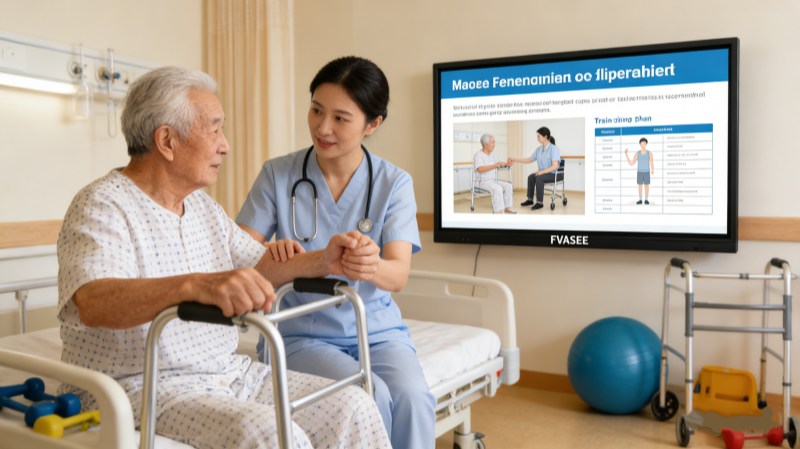
In-room digital signage supports patient education and guidance
Interactive displays enable real-time communication and collaboration
Separating these functions helps hospitals deliver clear, purpose-driven information without overloading a single screen.
Scalability Across Departments and Facilities
Hospitals often introduce telehealth gradually, starting with specific departments or use cases. Interactive display solutions must therefore support phased deployment.
FVASEE interactive displays can be deployed room by room while maintaining consistent hardware standards, allowing hospitals to expand telehealth capabilities without redesigning infrastructure.
Centralized device management further supports scalability by simplifying updates and configuration across multiple rooms or locations.
Supporting Patient Experience and Access to Care
From a patient perspective, telehealth displays help reduce delays and improve access to specialized care. Clear visuals and stable connections make remote consultations feel more personal and less abstract.
By enabling meaningful visual interaction, in-room telehealth displays support patient confidence and understanding during virtual encounters.
Conclusion
Interactive displays play a critical role in enabling telehealth within patient rooms. By providing reliable, easy-to-use visual interfaces, hospitals can extend care beyond physical boundaries while maintaining communication quality.
FVASEE interactive display solutions support in-room telehealth as part of a broader patient room display strategy—helping healthcare facilities integrate virtual care into everyday operations.