Fvasee Smart City Control Room Displays: Key Features for Urban Management

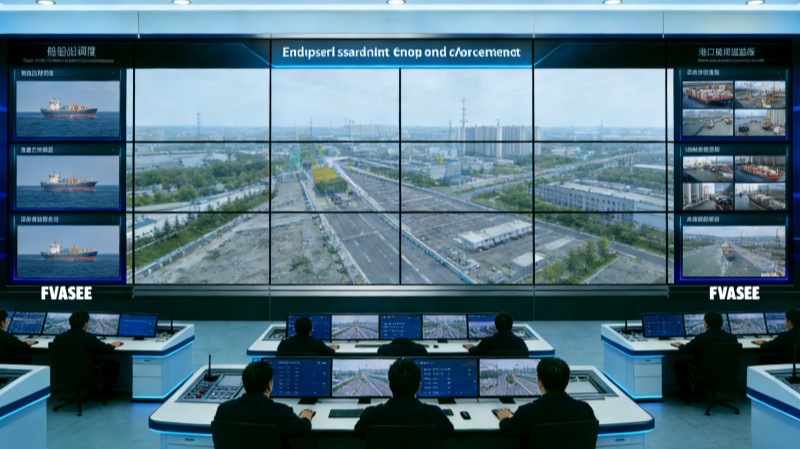
Essential Features of Smart City Control Room Displays for Modern Urban Management
Key display capabilities that empower city leaders to monitor, analyze, and act on real‑time data across urban systems
Smart cities increasingly rely on large‑scale digital displays and integrated visualization platforms to coordinate critical infrastructure, public safety, and urban services. In a control room setting — whether for traffic management, emergency response, or utility monitoring — the clarity, reliability, and usability of display systems directly impact the quality of situational awareness and decision‑making.
Modern smart city control room display systems must support massive data streams from sensors, cameras, transit networks, and public systems, presenting that information in a way that is intuitive and actionable. A robust control room display environment offers city administrators a centralized view of urban operations that enhances responsiveness, efficiency, and public safety.
1. Simplicity and Ease of Deployment
Smart city control rooms should avoid complexity in both setup and daily operation. Giant‑screen displays that integrate all controls and require minimal cabling simplify deployment and ongoing maintenance. All‑in‑one display solutions reduce clutter and lower the technical barrier for local staff to install and manage large‑format screens.
Simplicity also means intuitive user interfaces that allow control room operators to configure layouts, switch data sources, and adjust settings quickly without extensive training.
2. Scalability and Expandability
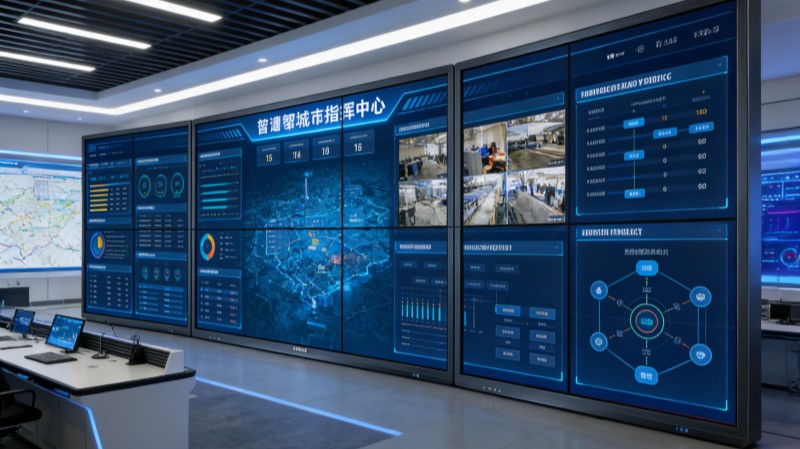
A smart city may start with a single large display but can grow to require a network of video walls, ultra‑wide displays, LCD or LED panels, and multiple workstations. Scalable display solutions allow cities to add screens or build multi‑panel video wall arrays as data needs evolve.
For example, control room operators may need coordinated multi‑screen layouts to compare traffic data, environmental sensor feeds, transit operations, and public safety alerts simultaneously. Compatibility between central displays and desktop‑level monitors ensures that both overview and detailed micro‑level information are easily accessible.
3. Security and Network Protection
Control room displays are often connected to municipal networks and therefore can be vulnerable to cyber threats if improperly secured. Enterprise‑grade display solutions support hardened security architectures with measures such as secure boot, encrypted communications, and system integrity protection.
Security is especially important where control room systems aggregate sensitive data for emergency services, law enforcement, public safety, or critical infrastructure operations. A secure display ecosystem helps protect real‑time feeds and operational dashboards from unauthorized access or tampering.
4. High Clarity, Visibility, and Real‑Time Performance
The core purpose of a control room video wall or giant LED display is to present vast amounts of visual data with clarity and precision. Advanced LED and large‑format displays deliver high brightness, rich colors, and wide viewing angles — even in well‑lit control rooms.
Display technologies such as microLED and HDR‑enhanced panels provide sharp contrast and detail that help operators detect subtle changes in sensor feeds, traffic maps, or real‑time alerts. This level of visual fidelity is essential for critical operations, from emergency response coordination to transit system monitoring.
Additional Capabilities to Consider
In addition to the four essential qualities above, modern control room setups benefit from other advanced display capabilities, including:
24/7 Reliability and Robust Performance
Displays that can operate continuously, with mechanisms for power redundancy and remote rebooting, ensure uninterrupted visibility of urban operations.
Intelligent Software Integration
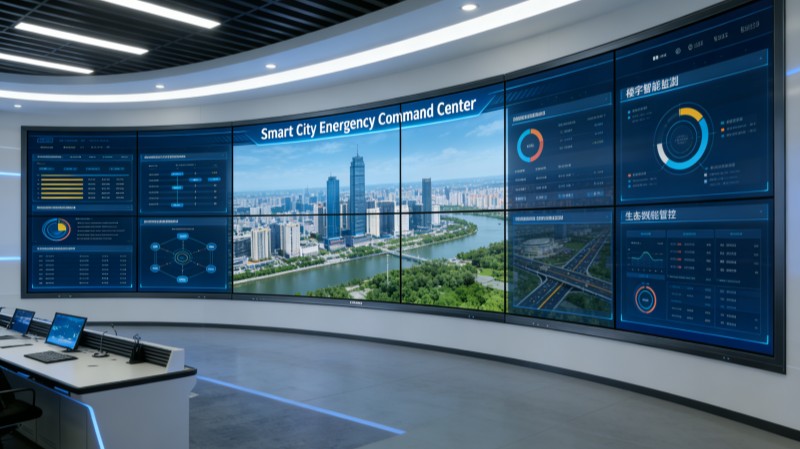
Control room display software should support real‑time analytics, data overlays, and AI‑enhanced image processing to improve the readability of low‑resolution feeds.
Seamless Data Integration
Smart city systems aggregate information from diverse endpoints — cameras, IoT sensors, transit networks — and displays must integrate this data while maintaining performance and synchronization.
Automation and Workflow Enhancement
Software that automates layout updates, data feed switching, or alert triggers can streamline operator workflows and accelerate response times.
These capabilities enhance the effectiveness of control room displays in delivering actionable insights and improving the experience of operators and decision‑makers.
Conclusion
Smart city control room displays are more than just large screens — they are central components of modern urban management infrastructures. By prioritizing simplicity, scalability, security, and high‑quality visualization, cities can build control room display systems that empower administrators to monitor critical urban data and act with confidence.
FVASEE display solutions — including large‑format LED displays, scalable video walls, and integrated digital signage systems — provide the power, flexibility, and reliability required for smart city operations. Whether managing public safety monitoring, transit command centers, or utility networks, FVASEE displays help cities turn data into action.