Designing Next-Generation Patient Rooms with Digital Displays | FVASEE

Design Considerations for Next-Generation Patient Rooms With FVASEE Digital Solutions
Patient rooms are at the heart of modern healthcare delivery, serving as both a treatment space and a personal retreat for individuals during vulnerable moments. With advances in digital technology and evolving expectations from patients, caregivers, and clinical staff, the design of patient rooms is no longer just about physical layout — it’s about creating connected, comfortable, and efficient environments that support care, communication, and experience.
Integrating smart digital infrastructure, interactive displays, and flexible controls into patient rooms is essential for hospitals seeking to improve outcomes and embrace future-ready healthcare delivery. Below are key considerations that modern healthcare facilities and designers should account for — including practical insights into how FVASEE digital signage, interactive displays, and all-in-one solutions can help.
1. Adopt Integrated Digital Information Systems
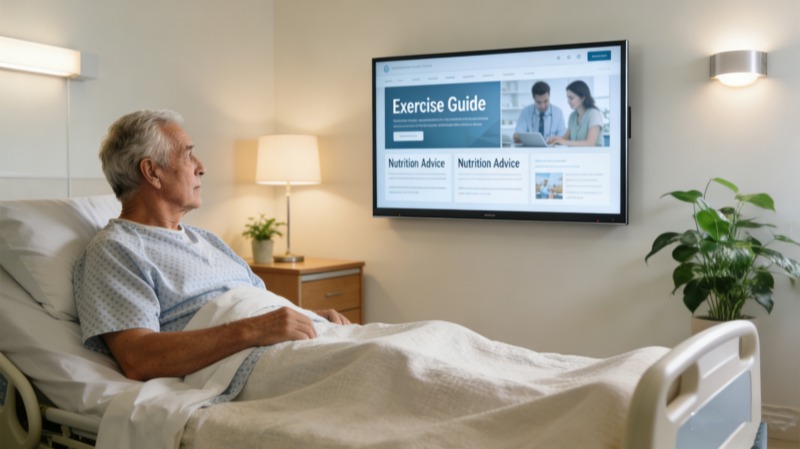
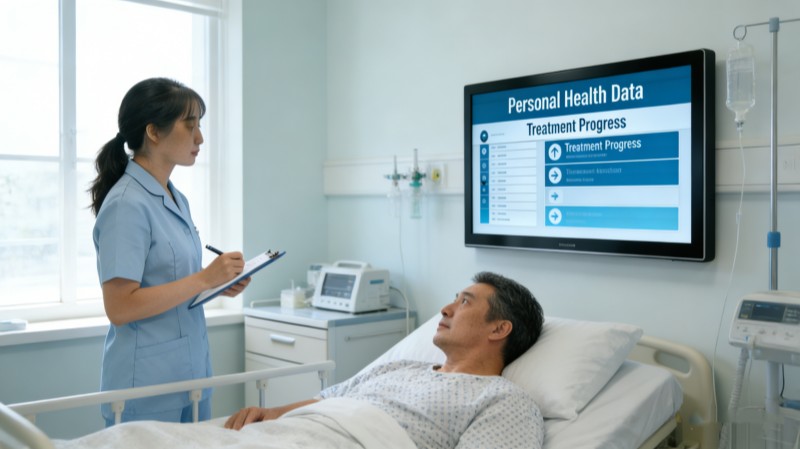
Traditional dry-erase boards have long been used to list care team details, medications, and discharge plans, but they are prone to errors, overlap, and outdated handwriting. Modern patient rooms benefit from digitally powered displays that pull data automatically from electronic health records (EHR), care team schedules, and real-time communication systems. These digital boards ensure that patients, family members, and caregivers see the most accurate information at all times without manual updates.
How FVASEE helps: FVASEE digital signage solutions can be configured as automatic digital information boards that update real-time patient details, schedules, and alerts. Integrated with back-end systems, FVASEE displays reduce administrative overhead while improving accuracy in care communication.
2. Support Telepresence and Remote Care
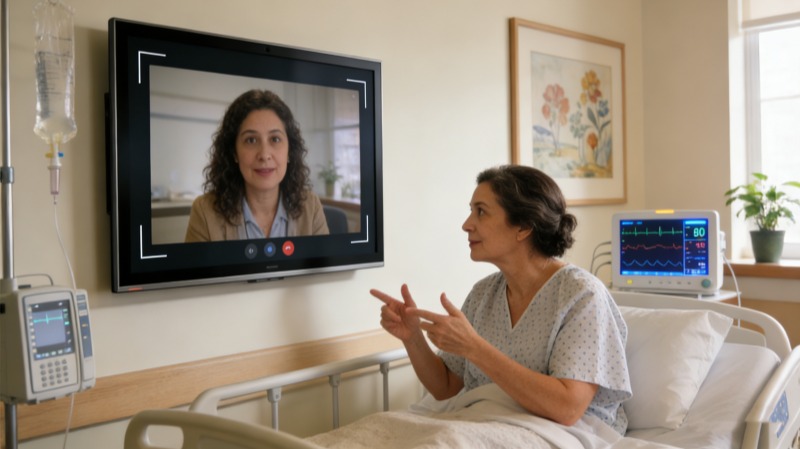
Interactive displays that support video and virtual interactions extend the reach of care beyond the bedside. Telehealth integration enhances clinical workflows — allowing specialists to consult remotely, caregivers to engage in treatment discussions, and family members to visit virtually.
How FVASEE helps: FVASEE’s interactive flat panel displays and smart patient room screens support web conferencing and telemedicine applications, making virtual care and remote monitoring more seamless. These displays also facilitate collaborative discussions between clinicians and patients using shared visual content.
3. Enhance Patient Engagement and Comfort
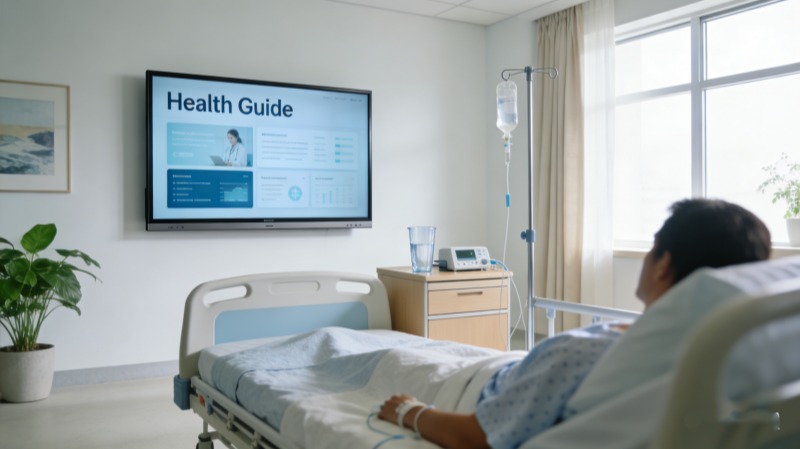
A digitally connected patient room is more engaging and comforting. Beyond clinical data, patient room entertainment and information systems can present tailored health education, wellness content, and relaxation media — helping reduce anxiety and perceived wait time. Research shows that engaged patients often report higher satisfaction and lower stress levels during hospital stays.
How FVASEE helps: FVASEE smart displays provide high-quality entertainment and content delivery platforms that can be personalized for patients. From educational videos and digital wayfinding content to interactive health programs, these display solutions support holistic patient engagement.
4. Offer Patient-Centric Controls
Modern rooms often allow patients to control aspects of their environment — such as lighting, temperature, window shades, and entertainment — through digital interfaces or bedside tablets. These controls improve comfort, give patients a sense of autonomy, and reduce simple service calls that can burden nursing staff.
How FVASEE helps: By integrating FVASEE interactive displays with room control systems, hospitals can offer intuitive interfaces that let patients adjust environmental settings or request assistance directly, contributing to a more responsive care experience.
5. Leverage Displays Beyond the Patient Room
A well-designed healthcare facility considers the patient journey outside the room as well. Strategically placed displays in hallways, nurses’ stations, waiting areas, and entryways support navigation, real-time updates, and operational communication.
For example:
Nurses’ stations: Central dashboards keep care teams aware of patient statuses and task lists.
Room entrance signage: Displays outside can show allergies, language preferences, and safety notes, improving preparedness and reducing errors.
Waiting areas: Dynamic displays can show queue information, wellness tips, and wayfinding directions to reduce stress and uncertainty.
How FVASEE helps: FVASEE digital signage systems offer scalable solutions that can be deployed throughout the facility. With easy centralized content management, hospitals can ensure messages remain consistent and up-to-date across all locations.
6. Plan for Future-Ready and Scalable Spaces
Technology evolves quickly; patient room design must be scalable and adaptable. Healthcare architects and IT planners should ensure that digital display infrastructure, connectivity, and power requirements are built into the architectural plan rather than treated as an afterthought.
How FVASEE helps: FVASEE displays are designed with future upgrades in mind, supporting modular integrations and software enhancements as hospital needs grow. Whether adding telemedicine features, interactive educational tools, or centralized broadcast capabilities, these solutions help future-proof patient rooms.
Conclusion
The next generation of patient rooms is more than a physical space — it’s a digitally enabled environment designed to improve care, comfort, and experience. By embedding digital communication systems, interactive interfaces, and smart display technologies throughout the patient journey, healthcare facilities can enhance clinical workflows, reduce uncertainty, and elevate satisfaction for patients, families, and staff alike.
FVASEE digital signage and interactive display solutions provide the foundation for such smart patient room designs, combining real-time information, remote connectivity, and flexible content delivery to meet the expectations of modern healthcare environments.